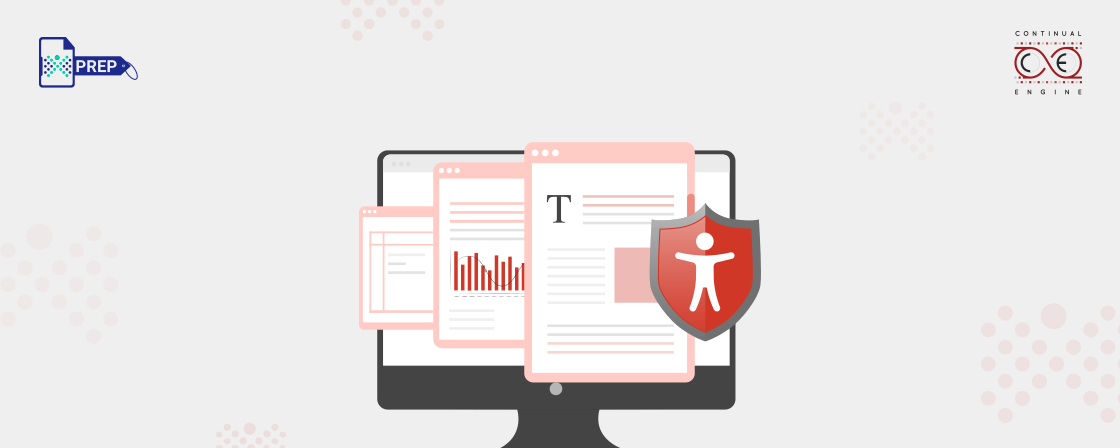
In today’s digital age, accessible documents are critical for ensuring that everyone, regardless of their disabilities, can access and consume information. The good news is that technology is advancing at an unprecedented pace, making it easier to create accessible documents. In this article, we will explore some of the emerging trends and technologies that are changing the future of document accessibility.
Key Takeaways
- Emerging technologies such as artificial learning, machine learning, and virtual reality are transforming how we create and distribute accessible documents.
- Mobile and web accessibility are becoming essential in making documents accessible to everyone.
- Inclusive design is an approach that considers the needs of all users, including those with disabilities.
- Cloud document management is gaining popularity as more organizations move to the cloud, providing secure and accessible document storage.
Key Document Accessibility Trends
1. Artificial Intelligence and Machine Learning
Artificial intelligence (AI) and machine learning (ML) are trending topics in the tech world that are revolutionizing document accessibility. AI and ML are used to increase accessibility that will make a real difference in the lives of people with disabilities. AI-driven document accessibility tools can automatically detect accessibility issues and suggest improvements. ML can analyze large datasets to identify patterns and create accessible templates.
2. Mobile Accessibility
As the usage of mobile devices continues to increase, they have become an indispensable component of our everyday lives. Accordingly, businesses must carefully deliberate on ensuring ADA (Americans with Disabilities Act) compliance across all mobile platforms. The growing prevalence of mobile devices has led to the widespread adoption of various accessibility features such as text-to-speech, speech-to-text, and image recognition. Furthermore, mobile devices seamlessly integrate with other assistive technologies like screen readers and Braille displays, making them a crucial tool for producing accessible documents.
3. Web Accessibility
In today’s digital age, web accessibility is gaining traction and is essential forto document accessibility. The Web Content Accessibility Guidelines (WCAG) present a comprehensive framework for developing accessible web content. The principles of perceivability, operability, understandability, and robustness form the cornerstone of WCAG. Additionally, accessible websites offer a range of features, including keyboard navigation, text-to-speech, and video captions. Creating accessible web content is pivotal in guaranteeing that information is available to everyone online.
4. Virtual Reality
5. Blockchain Technology
6. Voice Recognition Technology
Voice recognition technology, or speech recognition, can be a powerful tool in improving digital accessibility for individuals with disabilities. Providing an alternative means of input can mitigate the barriers those who struggle with traditional input devices such as keyboards and mice face. This technology can thus enhance the user experience for people with physical or motor impairments and those with vision or reading difficulties. Additionally, it can improve the accessibility of digital content by providing an alternative means of navigating and interacting with websites, applications, and other digital media. Overall, incorporating voice recognition technology into digital products and services can significantly enhance accessibility and inclusivity, promoting equitable access to information and opportunities for all users.
7. Inclusive Design
Inclusive design is an approach to creating products and services that are accessible and usable by the broadest possible range of individuals, regardless of their abilities. In the digital realm, inclusive design can help to ensure that websites, apps, and other digital products are accessible to people with a range of disabilities, including visual, auditory, cognitive, and physical impairments. By considering the needs of users with disabilities from the outset, designers can create interfaces and content that are more intuitive, easy to use, and effective for all users. This can not only improve the accessibility of digital products but also enhance their overall usability and user experience.
8. Increased Adoption of Cloud Document Management
The adoption of cloud document management can significantly enhance digital accessibility. This is because documents stored in the cloud can be accessed from any device with an internet connection, providing greater flexibility and ease of use for individuals with disabilities who may require specialized software or assistive technology. Furthermore, cloud document management systems often include various accessibility features, such as text-to-speech and screen reader capabilities, making it easier for users with disabilities to read and interact with documents. In essence, cloud document management can significantly improve digital accessibility by increasing the accessibility and usability of documents, thus making them more widely available and user-friendly for all individuals, irrespective of their abilities.
9. Stricter Laws & Enforcement
Governments and regulatory bodies across the globe are strengthening accessibility laws and increasing enforcement to ensure digital documents are accessible to all users. Regulations such as WCAG compliance requirements, ADA-related guidelines, and regional accessibility mandates are placing greater responsibility on organizations to meet defined accessibility standards.
Non-compliance can result in legal action, financial penalties, and reputational damage. As a result, businesses are prioritizing proactive accessibility audits, accessible document workflows, and compliance-focused tools to reduce risk and ensure ongoing adherence to evolving legal requirements. This shift is making legal compliance a central driver of document accessibility initiatives rather than an afterthought.
Final Thoughts
Transform with Affordable Document Remediation
Experience top-tier PDF remediation powered by AI, delivering unmatched quality, precision, and scalability, all at a fraction of traditional time and cost.