Dear Valued Readers,
Welcome to Continual Engine (CE)’s August Newsletter!
- Digital accessibility is increasingly moving from isolated remediation projects to scalable, ongoing accessibility programs.
- As organizations manage growing volumes of digital content, AI and automation are creating new opportunities to improve accessibility workflows while human expertise remains essential for quality and validation.
This month, we bring you key updates, industry observations, and practical insights shaping the future of accessibility at scale.
What’s New in PREP
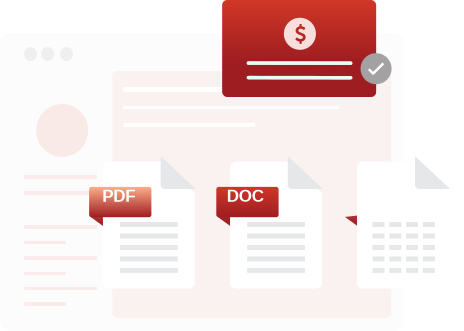
Managing PDF accessibility on a WordPress site can involve multiple steps – finding files, downloading them, remediating them, and uploading accessible versions again.
With PREP’s WordPress integration, organizations can manage this workflow directly from their PREP account.
The integration allows you to:
- View PDF files available in your WordPress environment.
- Select and send files directly to PREP for AI-assisted remediation or to the Continual Engine remediation team.
- Track remediation progress from the PREP Dashboard or Orders page.
- Review and make accessibility corrections using the PREP Tag Editor.
- Export remediated PDFs directly back to WordPress.
- Download original or remediated files when needed.
Once a remediated PDF is exported successfully, its status is updated to “Saved in WordPress,” making it easy to track which files have been remediated and returned to your website.
Watch the Tutorial of PREP WordPress Integration
This integration helps simplify the path from PDF discovery to remediation to publishing, making accessibility workflows easier to manage at scale.
Accessibility Unlocked Podcast | Episode 3: Title II & Digital Accessibility
As organizations continue preparing for digital accessibility requirements, the challenge isn’t simply understanding what the rules require. It’s building an accessibility program that can be sustained over time.
In Episode 3 of Accessibility Unlocked, we explore what that can look like for state and local governments, from establishing governance and policies to embedding accessibility into everyday workflows.
The conversation also looks at the role of training, auditing, remediation planning, and AI-assisted workflows, while highlighting why quick fixes alone aren’t enough to create lasting accessibility.
Listen to Episode 3: Title II & Digital Accessibility
Featured in The Educator : AI-Enabled Approach to Inclusive Education
The July 2026 issue of The Educator, the publication of the International Council for Education of People with Visual Impairment (ICEVI), features “AI-Enabled Accessibility in Digital Learning: A Human-Centered and Evidence-Based Approach to Inclusive Education,” a review paper authored by Dr. Kumar B.S.M. and Vijayshree Vethantham of Continual Engine.
The paper explores how AI is transforming digital accessibility in education, including automated document structuring, contextual image descriptions, semantic understanding, and scalable content remediation, while highlighting the continued importance of human expertise in creating inclusive learning experiences.
Read the full article on pages 153–159 of The Educator, Volume 41, Issue 2, July 2026.
Insights & Thought Leadership
-
Our Latest Blogs
-
- Descriptive Transcripts: Benefits, Examples, and Best Practices – An overview of the key accessibility barriers government agencies face, including outdated websites, inaccessible documents, legacy content, and resource challenges, along with strategies to improve digital accessibility.
- How to Scale PDF Accessibility with Automation? – Learn how AI-powered automation can help organizations scale PDF accessibility by handling repetitive tagging and document structuring, while accessibility experts focus on reviewing complex content and ensuring quality.
- Auto-Tagging vs Manual Tagging: What Is Better for Document Remediation? – This article compares auto-tagging and manual tagging for PDF remediation, exploring how automation improves speed, scalability, and consistency while human expertise remains important for complex content. It also explains why a hybrid approach can offer the best balance of efficiency and accuracy.
-
-
What We’re Seeing Across Industries
- A growing trend across state and local governments, and increasingly within financial institutions, is the move toward templatizing high‑volume documents such as agendas, minutes, and client statements. Standardizing these formats enables a true no‑touch remediation workflow, dramatically reducing manual tagging and saving thousands of hours of staff effort. This shift not only accelerates compliance but also strengthens long‑term digital accessibility maturity by creating predictable, repeatable structures that automation can handle with near‑perfect accuracy.
Discover the Latest News Articles
We aim to bring you engaging, insightful, and relevant updates on accessibility and compliance through these newsletters. We welcome any feedback or questions.
Warm Regards,
Continual Engine