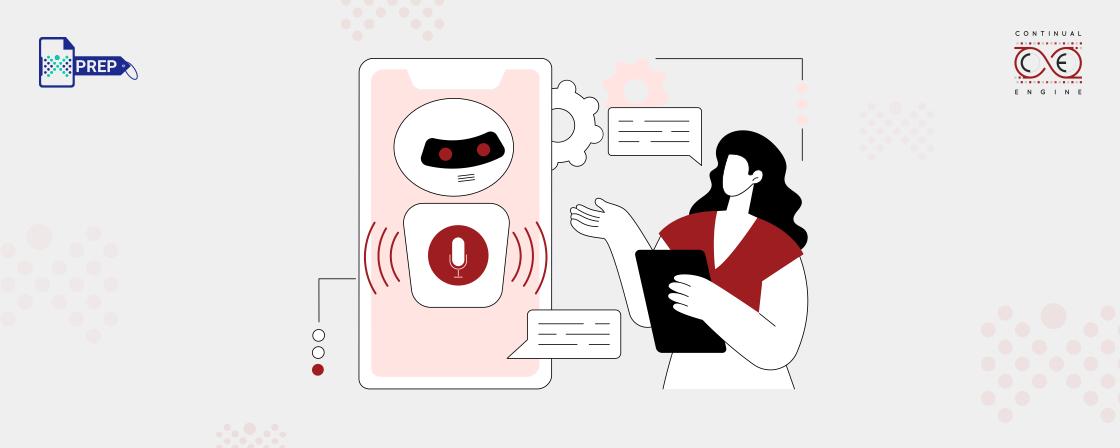
Closed captioning and subtitling play an important role in media today. Closed captions show text on the screen that explains what is happening in the audio, like spoken words or sound effects.
Subtitles, on the other hand, translate spoken dialogue into another language. These tools make videos, movies, and TV shows easier to understand for people who are hard of hearing or don’t speak the language used.
Importance of Video Captioning
Videos are watched by millions of people around the world, from educational content to ads, movies, TV shows, and even vlogs. However, not everyone can fully enjoy these videos because of hearing problems or language differences.
This is where closed captioning and subtitles come in handy. Adding subtitles or closed captions helps people with hearing impairments understand what’s being said, and also allows those who speak different languages to follow along more easily. Because of this, there’s been a growing need for captioning services to make videos accessible to everyone.
How AI is Enhancing Video Captioning?
1. Automatic Speech Recognition (ASR) Technology
ASR is one of the major advances in AI for captions. It can listen to what’s being said and quickly turn the words into written text. Over time, ASR has gotten much better at recognizing words accurately. It can even pick up different accents and speech styles, making it a useful tool for creating captions for various kinds of video content.
2. Real Time Captioning
AI-powered captioning systems have made it possible to show captions in real-time for live events, like webinars or streams. As the event happens, these systems listen to what’s being said and display captions at the same time. This is helpful for people with hearing difficulties, but it’s also useful for others, such as viewers in noisy places or people who don’t speak the language fluently. Some just prefer to read along with the video.
3. Accuracy and Cost Efficiency
Manual captioning is a labor-intensive process that needs skilled transcribers, taking a lot of time and effort. This can make it quite expensive, especially for organizations that have a lot of video or audio content. In contrast, AI-driven captioning tools can cut down both costs and the time needed to create captions.
In addition, AI algorithms keep improving by learning from large amounts of data, which helps make their transcriptions more precise. This ongoing enhancement is crucial for ensuring that captions remain high-quality, which is especially important for users with hearing impairments who depend on them to get information.
4. AI-Enhanced Subtitle Clarity and Readability
Making subtitles easier to read is something AI algorithms can help with. These algorithms look at different things like font size, color contrast, and where the text is placed on the screen to make subtitles clearer.
By adjusting these elements, AI can create subtitles that are easy to read, even in tough viewing situations. This way, everyone can access and understand what’s happening in the video, no matter where they are watching from.
5. Multilingual Captioning Capabilities
AI captioning tools can now work with several languages, which helps make content available to a wider audience. These tools can listen to and understand speech in different languages, which is useful for people around the globe.
For businesses and content creators that have an international reach, using AI for multilingual captioning is beneficial. It allows them to connect with more viewers and makes their content accessible to people who speak various languages.
6. Improved User Experience through AI-Powered Display Customization
AI can help make displays more user-friendly by allowing people to change settings according to what they like. Users can tweak the subtitle font size, color, and position to match their personal preferences. This kind of customization improves how enjoyable and accessible videos are for everyone, ensuring a better viewing experience overall.
How Continual Engine Can Help You in Video Closed Captioning?
While AI transcription tools have improved, they still don’t match the accuracy of human transcription. As a result, video producers often find themselves making many edits to ensure they comply with accessibility laws, like the Americans with Disabilities Act (ADA).
Continual Engine helps address this issue by offering captions that combine AI assistance with human validation, ensuring your content is accurate and compliant with the necessary standards.
Our solution not only saves you time but also ensures your videos are fully accessible, meeting ADA and WCAG guidelines without the need for extensive manual corrections. Let us simplify accessibility for you, making it easier and more efficient. Contact us to learn more.
Make Your Video Content Accessible to Everyone
Make Your Video Content Accessible to Everyone
Get ADA-compliant captions and audio descriptions with our AI-driven, human-validated solutions that deliver accurate, high-quality captions in multiple languages, helping you reach a wider audience while staying compliant with accessibility standards.
Closing Thoughts
AI is transforming the world of captioning, making videos more accessible and understandable for everyone. With advancements like automatic speech recognition and real-time captioning, we can reach a broader audience, including those with hearing challenges or language barriers.
By blending AI technology with human expertise, we can ensure that captions are not only efficient but also accurate and compliant with accessibility standards. This progress highlights the importance of making media inclusive for all viewers.