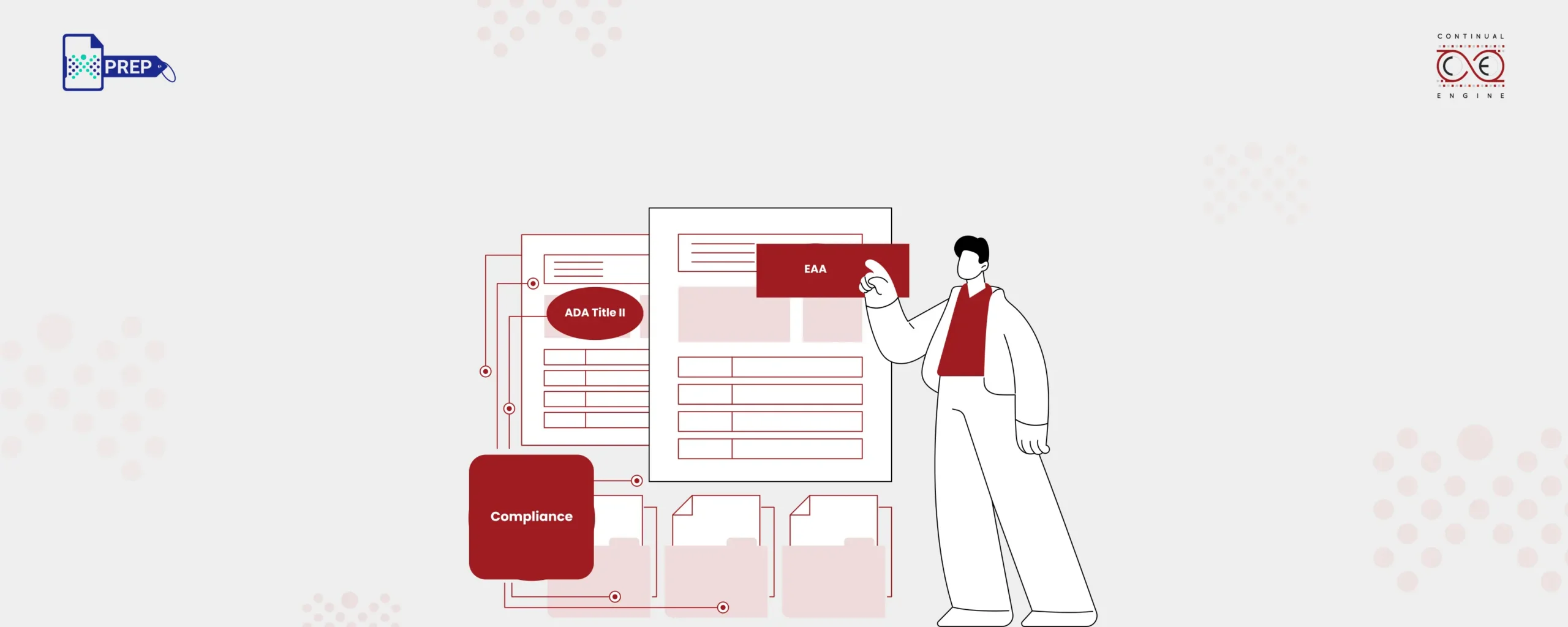
Although both ADA Title II and the European Accessibility Act (EAA) promote accessibility for people with disabilities, they apply to different regions and organizations.
ADA Title II governs state and local government entities in the United States, while the EAA applies to businesses offering covered products and services in the European Union. Both frameworks rely heavily on accessibility standards and encourage inclusive digital experiences.
What Is ADA Title II?
ADA Title II is a provision of the Americans with Disabilities Act that prohibits discrimination against people with disabilities in programs, services, and activities provided by state and local governments.
It applies to public entities such as government agencies, public schools, public universities, transportation authorities, and municipalities.
In addition to physical accessibility, ADA Title II now extends to digital services, including websites, mobile applications, online forms, and digital documents.
Read More About ADA Title II
What Is the European Accessibility Act (EAA)?
The European Accessibility Act (EAA) is a European Union directive designed to create consistent accessibility requirements across member states.
Unlike ADA Title II, which focuses on public entities, the EAA primarily affects businesses that provide covered products and services to consumers within the EU. These include e-commerce platforms, banking services, transportation systems, telecommunications services, digital publications, and self-service terminals.
Read More About European Accessibility Act (EAA)
ADA Title II vs EAA: Key Differences Explained
| Aspect | ADA Title II | European Accessibility Act (EAA) |
|---|---|---|
| Region | United States | European Union |
| Type of Regulation | Civil rights law | EU directive |
| Primary Goal | Equal access to public services | Common accessibility framework across the EU |
| Who Must Comply | State and local government entities | Businesses offering covered products and services |
| Scope | Government websites, apps, digital documents, and online services | Websites, apps, e-commerce, banking, e-books, kiosks, ATMs, and more |
| Technical Standard | WCAG 2.1 Level AA | EN 301 549 incorporating WCAG 2.1 AA |
| Major Deadlines | April 26, 2027 April 26, 2028 | June 28, 2025 June 28, 2027 June 28, 2030 June 28, 2045 (or 20 years from installation) |
| Enforcement | U.S. Department of Justice | Authorities within each EU member state |
| Penalties | Lawsuits, investigations, and remediation requirements | Fines, restrictions, and product removal |
| Documentation Requirements | Recommended but not mandatory | Technical documentation and accessibility information may be required |
Where Do ADA Title II & EAA Overlap?
Despite the two regulations serving accessibility in different ways, both share many common principles.
They encourage equal access to digital experiences and rely heavily on internationally recognized accessibility standards. And the organizations that comply with WCAG 2.1 requirements often establish a strong foundation for meeting obligations under both frameworks.
Both regulations emphasize:
- Accessible websites and mobile applications
- Compatibility with assistive technologies
- Accessible documents and digital content
- Effective communication
- Inclusive user experiences
Can Organizations Comply with Both ADA Title II & EAA?
Yes, organizations that operate internationally may need to comply with both frameworks.
For example, a public university in the United States that serves European consumers or partners with organizations in the EU may need to consider both ADA Title II and the EAA. Since both regulations rely on similar accessibility principles, implementing accessibility best practices and following recognized standards can simplify compliance efforts.
What Are the Compliance Deadlines for ADA Title II?
- April 26, 2027: State and local government entities serving populations of 50,000 or more must comply with the updated web accessibility requirements.
- April 26, 2028: Special district governments and public entities serving fewer than 50,000 people must comply.
What Are the Compliance Deadlines for EAA?
- June 28, 2025: Most covered products and services entering or operating in the EU market must meet accessibility requirements.
- June 28, 2027: Emergency communication services must comply with EAA requirements.
- June 28, 2030: Certain products and services already available before June 28, 2025, may continue under transitional provisions until this date.
- June 28, 2045 (or 20 years after installation): Some self-service terminals, including ATMs and ticketing machines, may remain in operation until the end of their transition period.
Simplify Global Accessibility Compliance with Continual Engine
Navigating multiple accessibility regulations can be challenging, especially for organizations managing websites, applications, documents, multimedia content, and digital services across different markets.
Continual Engine helps organizations build scalable accessibility programs that support both ADA Title II and EAA requirements. Through AI-powered technology and accessibility expertise, organizations can improve accessibility while reducing compliance risks.
Our solutions include:
- Website accessibility testing and remediation
- PDF and document accessibility services
- Multimedia accessibility solutions
- Mobile accessibility evaluations
- Accessibility audits and reporting
- Ongoing monitoring and support aligned with global standards
Build Accessibility with Confidence
Whether your organization needs to comply with ADA Title II, the EAA, or both, Continual Engine can help you identify barriers and create more inclusive digital experiences.
Frequently Asked Questions (FAQs):
No. ADA Title II is a U.S. civil rights law that applies to state and local government entities, whereas the EAA is a European directive affecting businesses that provide covered products and services within the European Union.
No. ADA Title II applies specifically to state and local governments. Most private businesses in the United States are generally covered under ADA Title III rather than Title II.
Yes. Companies located outside the EU may still need to comply if they sell covered products or provide covered services to consumers within EU member states.
Not entirely. While EN 301 549 incorporates WCAG 2.1 AA requirements for digital accessibility, organizations may also need to meet additional requirements related to documentation, product information, and accessibility obligations for covered services.
Non-compliance with ADA Title II or the EAA may result in investigations, lawsuits, fines, mandatory remediation, market restrictions, or reputational damage, depending on the applicable regulation and jurisdiction.